

Arm Holdings has positioned itself at the centre of AI transformation. In a wide-ranging podcast interview, Vince Jesaitis, head of global government affairs at Arm, offered enterprise decision-makers look into the company’s international strategy, the evolution of AI as the company sees it, and what lies ahead for the industry.
From cloud to edge
Arm thinks the AI market is about to enter a new phase, moving from cloud-based processing to edge computing. While much of the media’s attention has been focused to date on massive data centres, with models trained in and accessed from the cloud, Jesaitis said that most AI compute, especially inference tasks, is likely to be increasingly decentralised.
“The next ‘aha’ moment in AI is when local AI processing is being done on devices you couldn’t have imagined before,” Jesaitis said. These devices range from smartphones and earbuds to cars and industrial sensors. Arm’s IP is already embedded, literally, in these devices – it’s a company that only in the last year has been the IP behind over 30 billion chips, placed in devices of every conceivable description, all over the world.
The deployment of AI in edge environments has several benefits, with team at Arm citing three main ‘wins’. Firstly, the inherent efficiency of low-power Arm chips means that power bills for running compute and cooling are lower. That keeps the environmental footprint of the technology as small as possible.

Secondly, putting AI in local settings means latency is much lower (with latency determined by the distance between local operations and the site of the AI model). Arm points to uses like instant translation, dynamic scheduling of control systems, and features like the near-immediate triggering of safety functions – for instance in IIoT settings.
Thirdly, ‘keeping it local’ means there’s no potentially sensitive data sent off-premise. The benefits are obvious for any organisation in highly-regulated industries, but the increasing number of data breaches means even companies operating with relatively benign data sets are looking to reduce their attack surface.
Arm silicon, optimised for power-constrained devices, makes it well-suited for compute where it’s needed on the ground, the company says. The future may well be one where AI is found woven throughout environments, not centralised in a data centre run by one of the large providers.
Arm and global governments
Arm is actively engaged with global policymakers, considering this level of engagement an important part of its role. Governments continue to compete to attract semiconductor investment, the issues of supply chain and concentrated dependencies still fresh in many policymakers’ memories from the time of the COVID epidemic.
Arm lobbies for workforce development, working at present with policy-makers in the White House on an education coalition to build an ‘AI-ready workforce’. Domestic independence in technology relies as much on the abilities of workforce as it does on the availability of hardware.
Jesaitis noted a divergence between regulatory environments: the US prioritises what the government there terms acceleration and innovation, while the EU leads on safety, privacy, security and legally-enforced standards of practice. Arm aims to find the middle ground between these approaches, building products that meet stringent global compliance needs, yet furthering advances in the AI industry.
The enterprise case for edge AI
The case for integrating Arm’s edge-focused AI architecture into enterprise transformation strategies can be persuasive. The company stresses its ability to offer scale-able AI without the need to centralise to the cloud, and is also pushing its investment in hardware-level security. That means issues like memory exploits (outside of the control of users plugged into centralised AI models) can be avoided.
Of course, sectors already highly-regulated in terms of data practices are unlikely to experience relaxed governance in the future – the opposite is pretty much inevitable. All industries will be seeing more regulation and greater penalties for non-compliance in the years to come. However, to balance that, there are significant competitive advantages available to those that can demonstrate their systems’ inherent safety and security. It’s into this regulatory landscape that Arm sees itself and local, edge AI fitting.
Additionally, in Europe and Scandinavia, ESG goals are going to be increasingly important. Here, the power-sipping nature of Arm chips offers big advantages. That’s a trend that even the US hyperscalers are responding to: AWS’s latest SHALAR range of low-cost, low-power Arm-based platforms is there to satisfy that exact demand.
Arm’s collaboration with cloud hyperscalers such as AWS and Microsoft produces chips that combine efficiency with the necessary horsepower for AI applications, the company says.
What’s next from Arm and the industry
Jesaitis pointed out several trends that enterprises may be seeing in the next 12 to 18 months. Global AI exports, particularly from the US and Middle East, are ensuring that local demand for AI can be satisfied by the big providers. Arm is a company that can supply both big providers in these contexts (as part of their portfolios of offerings) and satisfy the rising demand for edge-based AI.
Jesaitis also sees edge AI as something of the hero of sustainability in an industry increasingly under fire for its ecological impact. Because Arm technology’s biggest market has been in low-power compute for mobile, it’s inherently ‘greener’. As enterprises hope to meet energy goals without sacrificing compute, Arm offers a way that combines performance with responsibility.
Redefining “smart”
Arm’s vision of AI at the edge means computers and the software running on them can be context-aware, cheap to run, secure by design, and – thanks to near-zero network latency – highly-responsive. Jesaitis said, “We used to call things ‘smart’ because they were online. Now, they’re going to be truly intelligent.”
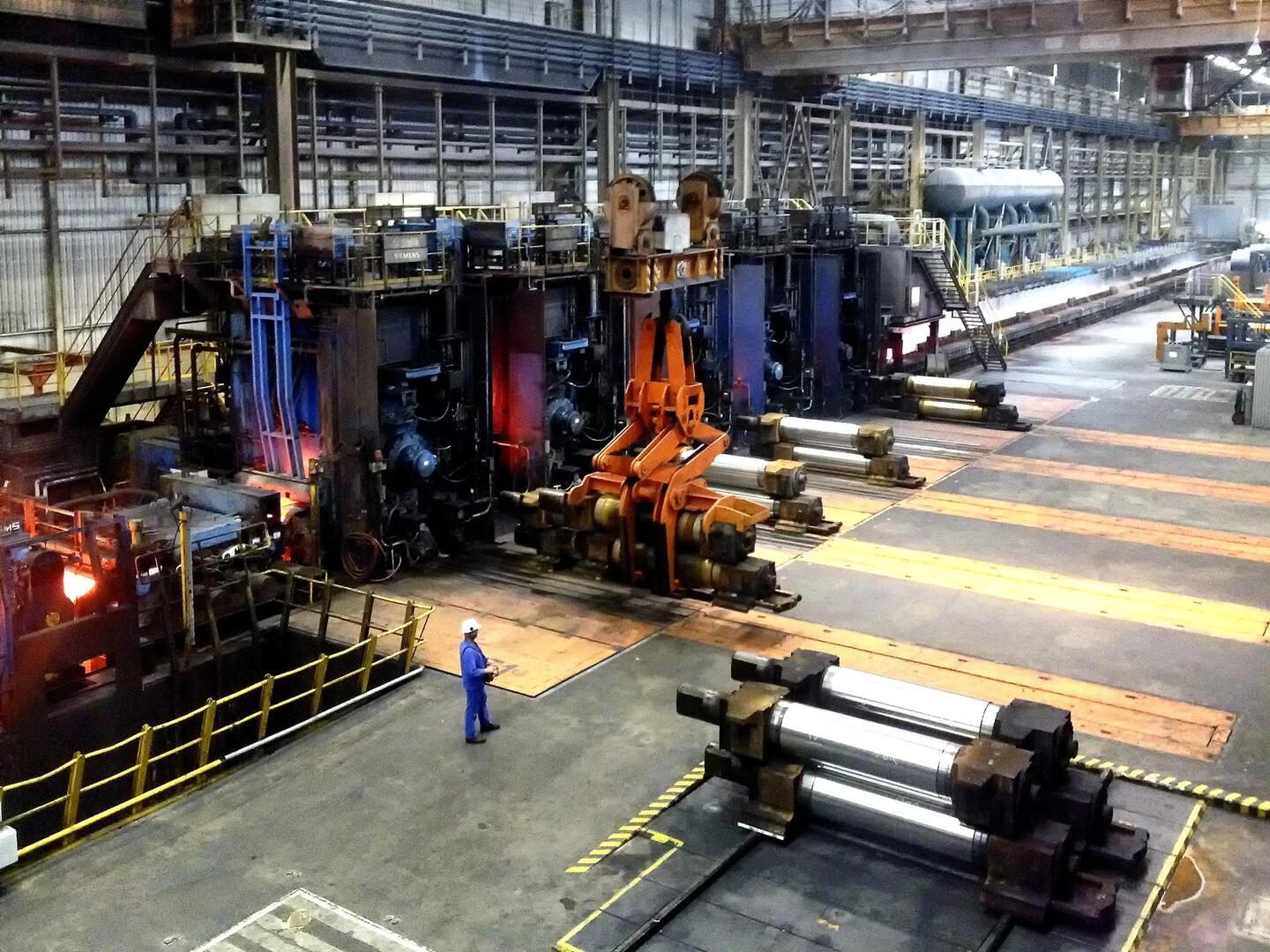
(Image source: “Factory Floor” by danielfoster437 is licensed under CC BY-NC-SA 2.0.)
Want to learn more about AI and big data from industry leaders? Check out AI & Big Data Expo taking place in Amsterdam, California, and London. The comprehensive event is part of TechEx and co-located with other leading technology events. Click here for more information.
AI News is powered by TechForge Media. Explore other upcoming enterprise technology events and webinars here.

